miércoles, 7 de noviembre de 2018

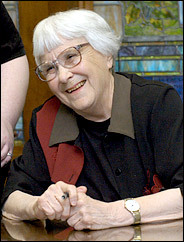
Female author: HARPER LEE (1926-2016)


WHO IS SHE?
Harper Lee (Alabama, 1926) was an American writer born and raised in a small town in the southern United States. As a child she was a precocious reader and study partner and neighbor of Truman Capote. After graduating from high school, she went to a university exclusively for women where she started a law degree and was editor of the humor magazine. Although she did not complete her studies, she studied a summer in Oxford before moving to New York definitively in 1950. In this city she worked as an employee in an airline before dedicating herself completely to writing. Harper completed his masterpiece, "Kill a Mockingbird" in the summer of 1959. After its publication in 1690, the novel became an immediate success that was received graciously by critics and by the public.
Harper did not give interviews and lived a modest retired life in his hometown. In 2007 she received the "Presidential Medal of Freedom" from the president of the United States. UU George W. Bush in the White House. The sequel to "Kill a Nightingale", titled ("Go, Set a Watchman"), was published on July 14, 2015. A year later the author died while asleep.

WHAT HAS SHE WRITTEN?
Harper Lee wrote several articles published in the American press between 1961 and 2006, as well as long stories. However, her two emblematic novels are:
  • “To Kill a Mockingbird" (1960): won the Pulitzer Prize in 1961. It is a plea for equality, justice and against racism; It narrates the life in the town of the writer during the years of the Great Depression and, specifically, an episode occurred in which Atticus Finch, a respected man in his community and model of righteousness, defends an African-American man falsely accused of rape of a white woman, in the framework of a very racist South, where the prejudices by the color of the skin suppose the condemnation.
  • "Go, Set a Watchman" (2015): it is a sequel to her first novel, the story is placed about 20 years later, when Scout returns to Maycomb from New York to visit his father, Atticus Finch.

WHAT HAS SHE SAID?
“You never really understand a person until you consider things from his point of view... Until you climb inside of his skin and walk around in it.”
― Harper Lee, “To Kill a Mockingbird”
“Until I feared I would lose it, I never loved to read. One does not love breathing.”
― Harper Lee, “To Kill a Mockingbird”
“People generally see what they look for, and hear what they listen for.”
― Harper Lee, “To Kill a Mockingbird”

WHY SHOULD WE NOT FORGET HER AND HER WORK?
Harper Lee(1926-2016) is a world-renowned author: her work "Kill a Mockingbird" remains a bestseller with more than 30 million copies sold and in 1999 is was voted "Best Novel of the Century" in a Library Journal poll. The issues she has dealt with are timeless and relevant at any time and place (spatially within the United States): equality, justice and racism.
-R.

Autora: HARPER LEE (1926-2016)

¿QUIÉN ES?
Harper Lee (Alabama, 1926) fue una escritora estadounidense nacida y criada en un pequeño pueblo en el sur de Estados Unidos. De pequeña fue una lectora precoz y compañera de estudios y vecina de Truman Capote. Después de graduarse en el instituto fue a una universidad exclusivamente de mujeres en la que comenzó un grado de Derecho y fue editora de la revista de humor. Si bien no terminó sus estudios, estudió un verano en Oxford antes de mudarse a Nueva York definitivamente en 1950. En esta ciudad trabajó como empleada en una aerolínea antes de dedicarse al completo a la escritura. Harper terminó su obra maestra, “Matar a un ruiseñor” (“To Kill a Mockingbird”) en el verano de 1959. Después de su publicación en 1690, la novela se convirtió en un éxito inmediato que fue recibido gratamente por la crítica y por el público.
Harper no concedía entrevistas y vivía una vida modesta retirada en su localidad natal. En 2007 recibió la "Medalla Presidencial de la Libertad" de manos del presidente de EE. UU. George W. Bush en la Casa Blanca. La secuela de “Matar un ruiseñor”, titulada “Ve y pon un centinela” (“Go, Set a Watchman”), se publicó el 14 de julio de 2015. Un año después la autora falleció mientras dormía.

¿QUÉ HA ESCRITO?
Harper Lee escribió diversos artículos publicados en la prensa estadounidense entre 1961 y 2006, así como historias largas. No obstante, sus dos obras emblemáticas son:
·        Matar un ruiseñor” (“To Kill a Mockingbird”, 1960): ganó el premio Pulitzer en 1961. Es un alegato por la igualdad, la justicia y contra el racismo; narra la vida en el pueblo de la escritora durante los años de la Gran Depresión y, en concreto, un episodio ocurrido en el cual Atticus Finch, un respetado hombre en su comunidad y modelo de rectitud, defiende a un hombre afroamericano acusado falsamente de la violación de una mujer blanca, en el marco de un Sur muy racista, donde los prejuicios por el color de la piel le suponen la condena.
·        Ve y pon un centinela” (“Go, Set a Watchman”, 2015): es una secuela de su primera novela, la historia se sitúa unos 20 años después, cuando Scout regresa a Maycomb desde Nueva York para visitar a su padre, Atticus Finch.

¿QUÉ HA DICHO?
“Nunca entiendes realmente a una persona hasta que consideras las cosas desde su punto de vista ... Hasta que te metes dentro de su piel y caminas alrededor en ella”.
― Harper Lee, “Matar a un ruiseñor”
“Hasta que temí que lo perdería, nunca amé leer. Uno no ama respirar.”
― Harper Lee, “Matar a un ruiseñor”
“La gente generalmente ve lo que busca y oye lo que escucha.”
― Harper Lee, “Matar a un ruiseñor”

¿POR QUÉ NO DEBERÍAMOS OLVIDARNOS DE ELLA Y SU TRABAJO?
Harper Lee (1926-2016) es una autora de referencia mundial: su obra “Matar un ruiseñor” sigue siendo un bestseller con más de 30 millones de copias vendidas y en 1999 se votó “Mejor Novela del Siglo” en una encuesta del Library Journal. Los temas que ha tratado son atemporales y relevantes en cualquier momento y lugar (espacialmente en el seno de Estados Unidos): la igualdad, la justicia y el racismo.
-R.

domingo, 4 de noviembre de 2018

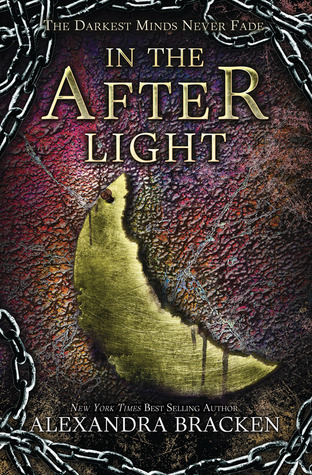
Review: “In The Afterlight” (The Darkest Minds #3) by Alexandra Bracken.


Book: The Darkest Minds #3
Editorial: Disney-Hyperion
Year: 2014
Pages: 535 (Hardcover)
ISBN-13: 9781423157526
PVP: 17 € (Hardcover) (Amazon)
Mark: 8/10

ABSTRACT
Ruby can't look back. Fractured by an unbearable loss, she and the kids who survived the government's attack on Los Angeles travel north to regroup. With them is a prisoner: Clancy Gray, son of the president, and one of the few people Ruby has encountered with abilities like hers. Only Ruby has any power over him, and just one slip could lead to Clancy wreaking havoc on their minds.
They are armed only with a volatile secret: proof of a government conspiracy to cover up the real cause of IAAN, the disease that has killed most of America's children and left Ruby and others like her with powers the government will kill to keep contained. But internal strife may destroy their only chance to free the "rehabilitation camps" housing thousands of other Psi kids.
Meanwhile, reunited with Liam, the boy she would-and did-sacrifice everything for to keep alive, Ruby must face the painful repercussions of having tampered with his memories of her. She turns to Cole, his older brother, to provide the intense training she knows she will need to take down Gray and the government. But Cole has demons of his own, and one fatal mistake may be the spark that sets the world on fire.

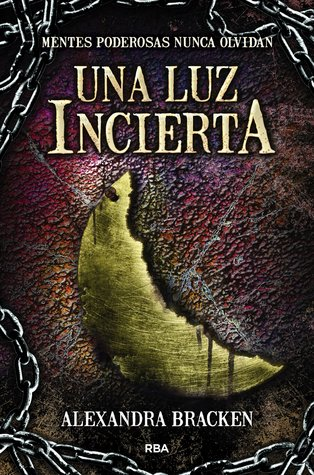
Reseña: “Una luz incierta” (The Darkest Minds #3) de Alexandra Bracken.


Libro: The Darkest Minds #3
Editorial: RBA
Año: 2015
Páginas: 528 (Tapa dura)
ISBN-13: 9788427208797)
PVP: 17 € aprox (Tapa blanda) (Amazon)
Nota: 8/10

SINOPSIS
Ruby no puede mirar hacia atrás. Desolada por una pérdida insoportable, ella y los niños que sobrevivieron a los ataques del gobierno en Los Ángeles viajan al norte para reagruparse.
La única arma con la que cuentan es un secreto demasiado volátil: la prueba de una conspiración del gobierno para encubrir la verdadera causa del ENIAA, la enfermedad que ha matado a la mayoría de los niños de Estados Unidos. Pero las luchas intestinas pueden destruir su única oportunidad para liberar los "campos de rehabilitación", donde aún viven miles de niños Psi.